Tasks vs. Ownership: Why Sharing the Mental Load Is Harder Than It Looks

Picture this. It's Wednesday evening and you realize your daughter's soccer cleats are too small. You mention it to your partner. He orders new ones that weekend. You thank him. Problem solved, right?
Except the following week you're the one who notices the shin guards are missing. The week after that you realize nobody signed the permission slip for the away game. A month later the carpool rotation falls apart because nobody was tracking it, and you end up covering three consecutive Saturdays while also remembering to bring the snack, the extra water bottle, and the form the coach asked for twice.
Your partner helped with the cleats. He just didn't take soccer.
That's the difference between a task and ownership, and it's the reason why couples who genuinely try to split the load still find one person running the whole operation. If you've ever felt like you're the default parent even after your partner "started helping more," this is probably why.
Why Delegation Doesn't Actually Share the Load
When the default parent asks for help, what usually happens is task transfer. A specific, bounded thing moves from one person's list to another. The dishes get done. The permission slip gets signed. The appointment gets booked. Each handoff looks like progress. And in a narrow sense it is.
But underneath every task is a layer of thinking that doesn't transfer with it. Noticing that the task needs doing. Knowing when it needs to be done by. Understanding how it connects to everything else. Remembering to check whether it was actually done. That layer, the anticipating, the monitoring, the holding it all together, stays with the person who delegated in the first place.
This is why "just tell me what to do" doesn't work as a long-term solution. It moves the doing without moving the thinking. And the thinking is most of the work.
Harvard sociologist Allison Daminger identifies four distinct stages of cognitive labor: anticipating a need, identifying options, making a decision, and monitoring the outcome. Most task delegation transfers only the middle two. The default parent still handles the anticipating and the monitoring, which means they're still doing more than half the cognitive work on every task they hand off.
That's not a character flaw in either person. It's what delegation structurally produces.
What Ownership Actually Looks Like
Ownership is different in a specific way. It doesn't start with a task. It starts with a domain.
When someone genuinely owns soccer, they own the whole thing. The schedule and the changes to the schedule. The gear, including noticing when it no longer fits. The carpool, the snacks, the forms, the coach's emails. The mental model of what soccer requires, held continuously, not just activated when something goes wrong.
The person who owns soccer doesn't need to be asked. They don't need to be reminded. They don't need the other person to notice that the cleats are too small, because they're already the one who would notice. The cognitive load of that domain lives with them, not as a burden transferred from someone else, but as something they've actually taken on.
That's a meaningful difference. Not just practically, but emotionally. The default parent doesn't just want fewer tasks. They want fewer things to track. Ownership is the only transfer that actually reduces the tracking.
Why It's Harder to Establish Than It Sounds
Genuine ownership requires the non-default partner to develop something they often don't have yet: a complete mental model of a domain. That takes time, and it requires the default parent to do something genuinely difficult, which is to let go of the monitoring.
This is where most attempts at redistribution quietly fail. One partner takes on a domain in name, but the other keeps checking. Keeps noticing. Keeps mentioning, just in case. Which signals, however unintentionally, that the ownership hasn't really transferred. The original owner is still watching. Still responsible. Still the fallback.
The non-default partner has a harder time building that mental model when the information lives in someone else's head. If the only way to know what soccer needs this week is to ask, the asking never stops, and the load never really moves. When both people can see the same picture, the upcoming schedule, what's been handled, what's coming next, the new owner can start to hold the domain themselves without being taught it piece by piece. That's not a small thing. It's the difference between delegating and actually letting go.
Ownership also works better when the system is forward-looking. When nothing has turned red yet, when the view is what's coming rather than what's already overdue, it's easier for the new owner to stay engaged. The moment a system feels like a list of failures, the person who didn't build it starts to disengage. Quietly, without drama, but consistently.
Letting go of the monitoring is not the same as not caring. It's trusting that the domain is held by someone else now and resisting the pull to verify. For a lot of default parents, that trust has to be built incrementally, through smaller domains first, before it extends to anything that feels high-stakes.
Where to Start
The most practical entry point is picking one complete domain and transferring it fully, not a task within it, the whole thing.
It works better when the domain is visible and bounded. School lunches. Birthday presents for the kids' friends. The dog, everything the dog needs. Sports for one child. These are complete enough to have a clear owner, specific enough that the owner knows what they're responsible for, and low-stakes enough that the default parent can practice letting go without it feeling catastrophic.
A regular weekly rhythm helps make this stick. When both people look at the same picture together, even for fifteen minutes, the non-default partner builds familiarity with the household's moving parts over time. Ownership stops being something assigned in a conversation and starts being something that develops naturally from both people staying informed.
The conversation that makes this work isn't "can you do more." It's "this whole thing is yours now." Including the noticing. Including the tracking. Including the things that haven't come up yet.
That conversation is harder to have than it sounds. But it's the only one that changes the actual structure of how the household runs, rather than just temporarily adjusting who's doing what.
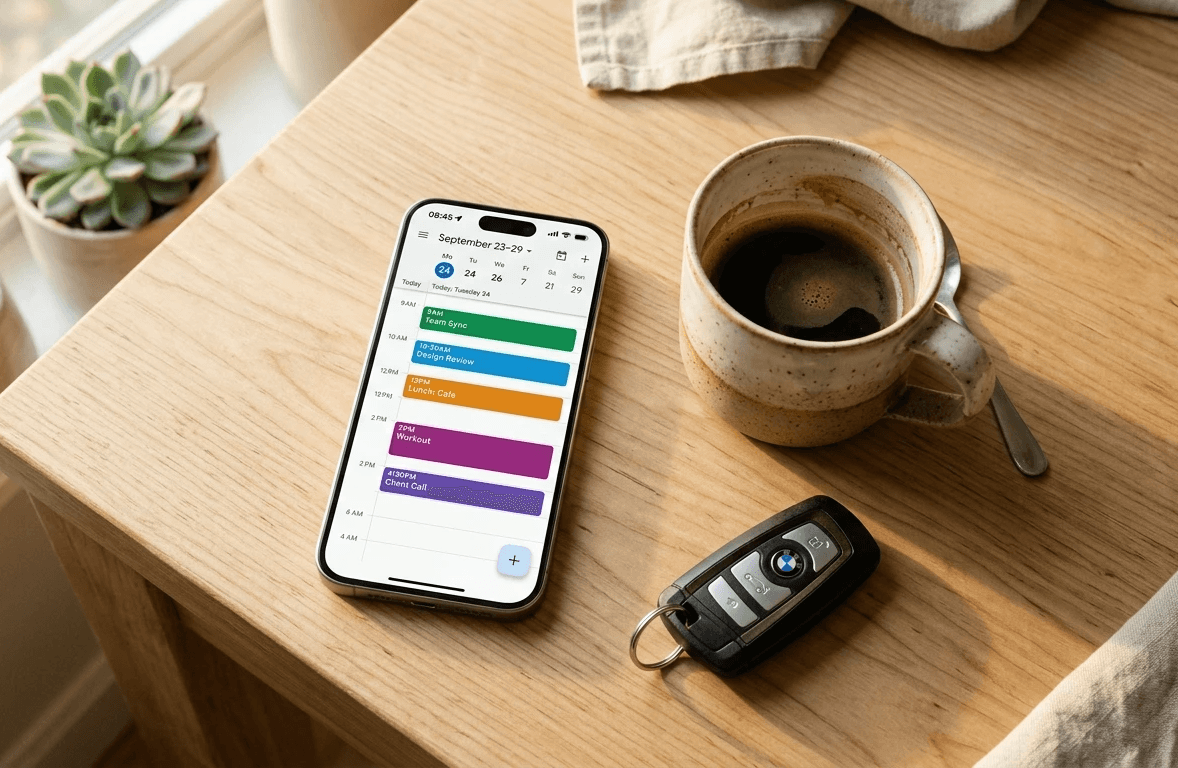
Shared visibility helps get there. When both people can see the same calendar, the same list of what's coming, the same picture of what the household needs, it's easier for the non-default partner to build the mental model that ownership requires. They're not relying on being told. They can see it themselves.
That's what we're building with Dona, a household where both people have the same view, and where ownership has somewhere to live that isn't just one person's head.
Frequently Asked Questions
What is the difference between a task and a domain? A task is a single, bounded action. A domain is everything that action belongs to. Booking the dentist appointment is a task. Children's health, all the appointments, the insurance cards, the medication history, the school forms, is a domain. Transferring a task leaves the thinking with the original owner. Transferring a domain moves the thinking too.
How do I stop being the default parent? Slowly, and by transferring whole domains rather than individual tasks. Pick one area of household life and hand it over completely, including the responsibility to notice what it needs. Then practice not monitoring it. That second part is harder than it sounds, but it's where the actual shift happens.
How do I talk to my partner about taking ownership of something? The most useful framing isn't "I need more help." It's "I need this whole thing to be yours." Be specific about what the domain includes, not just the visible tasks but the tracking, the anticipating, the things that haven't come up yet. Then agree on where that information lives so they can actually hold it without coming back to ask you.