The Running List in Your Head: How to Finally Put It Somewhere Else

It's 11pm and you're almost asleep when it surfaces. The permission slip. It's due Friday and you haven't signed it yet. You add it to the list in your head, right next to the dentist thing, the birthday gift you need to order before Thursday, the call to make to the school about the lunch account, and the slow-building awareness that you're almost out of milk.
Nobody asked you to hold all of this. You just do.
This is the household mental load: that low-level, persistent hum of running the operational picture of your home. Not the big things. The constellation of small ones. The form that's due, the appointment to schedule, the thing that needs to happen before the other thing can happen. The part nobody sees because it never quite makes it onto a calendar. It lives in your head, quietly, all the time.
Why the Running List Grows
The household mental load isn't a list of chores. It's a list of things you're tracking that haven't become tasks yet.
Chores are visible. They get done and you can see they're done. The dishes are clean. The laundry is folded. There's a kind of satisfaction in that.
The running list is different. It's the anticipatory layer: knowing that the soccer cleats will need replacing before the season starts, that the pediatrician recommends a check-up every year and it's been fourteen months, that the library books are somewhere in the house and the holds expire soon. None of these are tasks yet. They're just there, occupying space, requiring maintenance.
Research from Harvard sociologist Allison Daminger identifies four distinct phases of cognitive labor: anticipating a need, identifying options, making a decision, and monitoring the outcome. Most of what's on the running list lives in the first phase and the last one. The anticipating and the monitoring. The thinking that happens before and after the visible doing. And unlike dishes, it never looks like it's been finished.
Why You Can't Just Put It Down
If you've ever tried to stop tracking things, you know how quickly something slips.
The permission slip doesn't get signed. The check-up doesn't happen. The thing you were holding quietly in the back of your mind was the only reason it was going to happen at all, and when you stopped holding it, the thread disappeared.
This is what makes the default parent dynamic so persistent. It's not something you're doing voluntarily. It's something the household requires. The school calendar has to live somewhere. The upcoming bills have to be tracked by someone. If you stop tracking and nobody else picks it up, it falls.
The running list doesn't get smaller by deciding to care less. It gets smaller when there's genuinely somewhere else for the information to live.
The Problem With Asking for Help
The most common attempt at reducing the mental load is asking your partner to help more, which usually means asking them to do specific things when you ask them.
This is better than nothing. It moves tasks. But it doesn't move the running list.
The running list isn't made of tasks. It's made of awareness. And awareness doesn't transfer through delegation. When you say "can you book the dentist," you move one task. But the awareness that the dentist needs booking, and by when, and which dentist takes your insurance, and what's already on the calendar that week: that stays with you. You're still holding the whole domain. You've just handed off one execution.
Sharing the mental load means transferring the awareness, not just the task. That's a different thing to ask for. It requires the other person to develop a genuine mental model of a domain and hold it themselves without being prompted, which requires them to be able to see what you're seeing.
If the running list only lives in your head, they can't.
What Actually Works
The running list gets smaller when it has somewhere else to live.
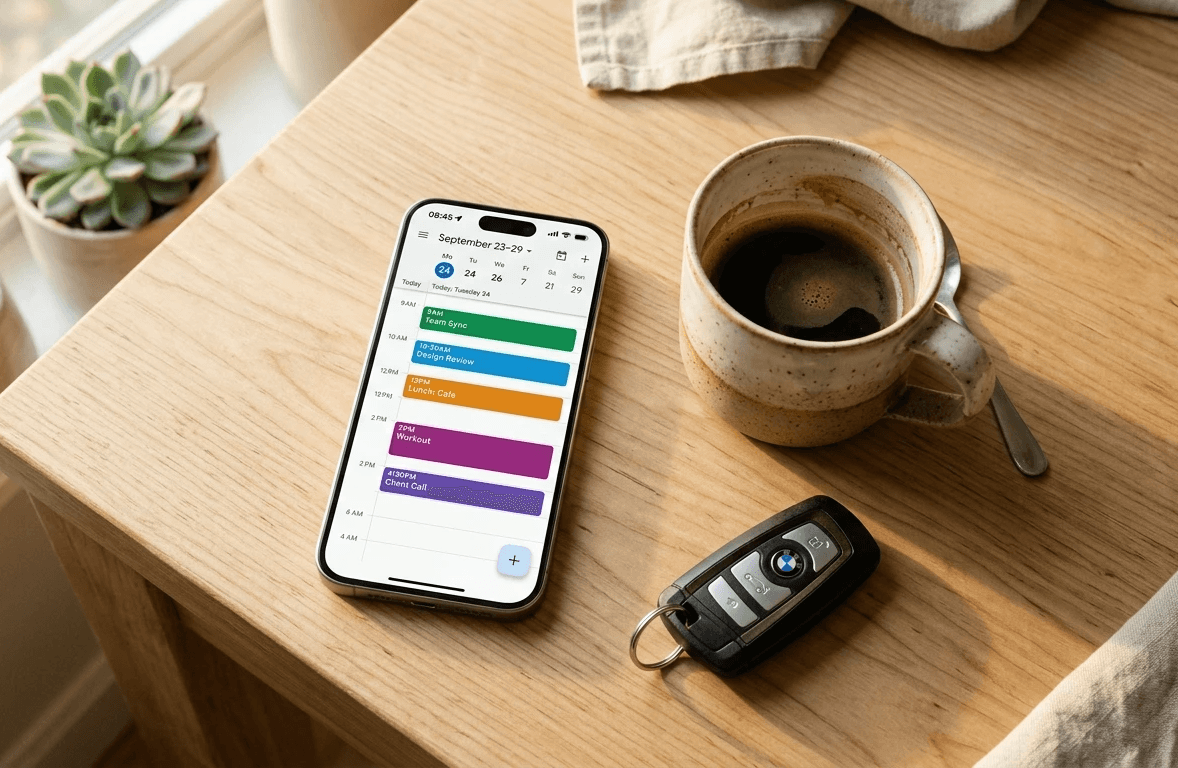
Not a to-do app that only you maintain. Not a shared calendar that nobody else remembers to check. Something that both people actually look at, that shows the forward view of what the household needs, and that makes it possible for the other person to act without being asked.
When the information is visible to both people, something shifts. Your partner doesn't need to be told about the dentist appointment; they can see it's been a year. They don't need reminding about the permission slip; they can see it in the same place you do. The awareness starts to distribute because the information is no longer trapped in one person's head.
This is harder to set up than it sounds, partly because the default is always to just hold it yourself. It's faster. It's already what you know how to do. The overhead of moving information out of your head and into a shared system feels like more work, at least at first. But the math shifts over time.
A shared system also helps with the other hard part: letting go. When your partner owns a domain and the information lives somewhere you can both see, you don't have to verify it by asking. You can check the same place they would. That quiet shift, from monitoring to trusting, is where the weight actually lifts.
Most shared calendars, used in isolation, won't get you there. The running list isn't just events. It's the anticipatory layer underneath them, the things that haven't become calendar items yet but will if someone remembers to handle them. That layer needs somewhere to live too.
Where to Start
Pick one domain of your household and externalize everything it contains. Not just the tasks: the whole awareness layer. What's coming up. What's already been handled. What needs to happen before the end of the month.
Then make it visible to both people. Not filed away somewhere organized. Available and current, somewhere both people actually look.
Once one domain is visible, the pattern gets easier to repeat. The running list doesn't disappear overnight. But it starts to get lighter, which is what it means to actually share it.
Dona keeps the household's running list somewhere both people can see it, the shared calendar, the to-dos, everything that needs to happen in one place, so the information stops living only in one person's head.
Frequently Asked Questions
What is household mental load?
Household mental load is the cognitive labor of tracking and managing what a home needs to function. It includes noticing upcoming tasks, anticipating needs before they become problems, coordinating schedules, and monitoring whether things have been handled. It's distinct from the visible work of doing chores: it's the thinking that makes the chores happen.
How do I reduce mental load at home?
The most effective approach is to externalize the information. Move the running list out of your head and into a shared system that both people actively use. Then work toward genuine ownership transfers, where one person takes responsibility for a whole domain, not just individual tasks, so the awareness moves with the work.
Why does the mental load fall on one person?
It accumulates gradually, through small moments where one person picks something up and the other doesn't notice it needed picking up. Over time, the pattern solidifies and becomes invisible. There's rarely a single decision; it assembles itself. Understanding how it happened is the first step to changing it.
Does a shared calendar help with mental load?
A shared calendar helps, but only partially. Most shared calendars capture events but miss the anticipatory layer, the tracking and noticing that happens before something becomes a calendar item. A complete shared system includes to-dos, upcoming needs, and the household's forward view, not just scheduled appointments.